
“Vibe coding” has become a buzzword in the tech world—especially in the age of AI. It refers to a style of software development where developers heavily rely on AI tools to generate, refine, and iterate code in real-time. Instead of writing every line manually, developers guide the process through prompts, intuition, and feedback, letting AI handle much of the execution.
As someone in tech, this idea immediately resonated with me. But recently, as a parent of a newborn, another thought struck me just as strongly: what if we’re doing the same thing with parenting?
Parenting in the Age of Google, AI, and Instant Answers
Vibe parenting isn’t a term you’ll find in parenting books—at least not yet. But many modern parents are already practicing it. It’s the instinct to turn to Google, social media, parenting forums, and AI tools like ChatGPT for validation and reassurance at every stage of early parenthood.
And honestly, I’m one of them.
From the moment a baby is born, the questions start pouring in—often in the quiet hours of the night, phone in one hand and baby in the other:
- Is it normal for my baby’s poop to be green or greenish-brown?
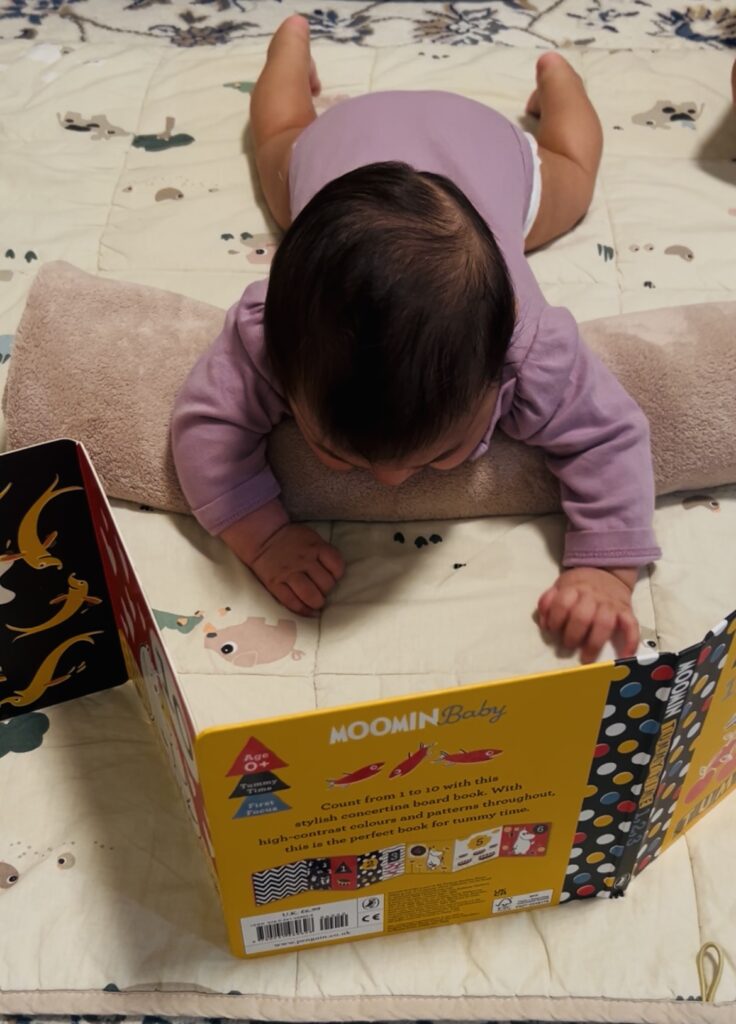
- Is it normal that my baby hates tummy time?
- How much reflux or spit-up is normal for a newborn?
- What milestones should a one-month-old baby be reaching?
- What should I do if my baby is refusing breast milk?
Each question leads to a search. One answer leads to another article, then a forum, then an AI-generated response—each offering slightly different advice. What starts as curiosity often turns into constant reassurance-seeking.
This is vibe parenting in action: parenting guided by algorithms, search rankings, and collective online opinion.
Why Modern Parenting Feels So Overwhelming
Today’s parents are more informed than any generation before—but also more anxious and mentally overloaded.
Parenting advice now comes from everywhere:
- Blogs and expert articles
- Parenting influencers and short-form videos
- Baby-tracking apps and milestone charts
- Online forums and comment sections
- AI tools that respond instantly
While this access to information can be empowering, it also creates pressure to optimize every decision. Every cry feels like a problem to solve. Every variation feels like something to fix.
Then vs. Now: A Shift in How We Parent
When we look back at how our parents raised us, the contrast is striking.
Most of us grew up without milestone apps, sleep trackers, or endless comparisons. Parenting relied more on:
- Observation and intuition
- Advice from family and community
- Periodic doctor visits—not instant validation
- Trust that children develop at their own pace
It wasn’t perfect, but it allowed room for uncertainty. Today, uncertainty feels uncomfortable—and instead of sitting with it, we search it.
The Mental Health Cost of Vibe Parenting
Research on parental mental health suggests that excessive information-seeking—especially in the postpartum period—can increase anxiety rather than reduce it.
Some common side effects of vibe parenting include:
- Heightened anxiety: Conflicting advice leads to self-doubt
- Decision fatigue: Too many options make small decisions exhausting
- Reduced confidence: Parents feel they’re constantly falling short
- Sleep disruption: Late-night Googling amplifies stress
Ironically, the more answers we seek, the less secure we feel. Instead of trusting ourselves or our babies, we start trusting search results.
Are We Losing Intuitive Parenting?
Babies aren’t algorithms. Development isn’t linear, and milestone charts are averages—not deadlines.
Yet modern parenting culture often treats deviation as a warning sign. When every behavior is immediately cross-checked online, parents may slowly lose confidence in reading their own child’s cues.
Vibe parenting doesn’t come from carelessness—it comes from deep love and fear of getting things wrong. But over time, constant second-guessing can quietly erode intuition.
Finding Balance in the Digital Parenting Era
This isn’t a call to abandon technology. For many parents—especially first-time parents or those without strong support systems—the internet and AI can be invaluable.
The key is intentional use, not total dependence.
Some ways to create healthier boundaries:
- Use online information as guidance, not absolute truth
- Avoid late-night searches when anxiety is highest
- Prioritize advice from your pediatrician over online forums
- Observe your baby more than the screen
- Accept that “normal” has a wide range
Parenting doesn’t need to be optimized. It needs to be present, patient, and human.
Who Are We Really Parenting?
Vibe parenting reflects the world we live in—fast, connected, AI-driven, and hungry for certainty. While it offers knowledge and reassurance, it also raises important questions about mental health, confidence, and trust.
So I’ll leave you with this:
Are we parenting our babies—or are we parenting our fears through the internet?
And does vibe parenting help us feel more capable—or more overwhelmed?
I’d love to hear your thoughts and experiences. Please share them in the comments below.